
Medication
For one week before surgery, do not take oral contraceptives, hormone medications, vitamin E, aspirin, or similar medications unless your surgeon has specifically instructed you to do so.
IMPORTANT FOR IV SEDATION
For one week before surgery, do not take oral contraceptives, hormone medications, vitamin E, aspirin, or similar medications unless your surgeon has specifically instructed you to do so.
Do not eat or drink, including water, for four hours before surgery. This includes gum, candy, coffee, and smoking.
Tell the clinic in advance if you are being treated for high blood pressure, heart disease, diabetes, thyroid disease, a severe cold, or breathing problems.
Avoid smoking and alcohol for three days before surgery.
Wear comfortable clothing that is easy to change out of. Bring a mask, scarf, hat, and sunglasses. Remove nail polish, eyelash extensions, contact lenses, jewelry, makeup, and piercings before surgery.
Do not plan to drive after surgery. Please use public transportation or arrange for a guardian to accompany you.
Bruising and swelling may increase for 2–5 days. Major swelling usually improves over 1–2 weeks, while residual swelling gradually subsides over 1–6 months. Temporary asymmetry is common during early recovery.
Mild bloody drainage, conjunctival swelling, tearing, a foreign-body sensation, reduced sensation around the eyes, or itching can occur as the area heals. Use prescribed eye drops or artificial tears as directed, and do not rub or scratch the surgical area.
Take prescribed oral medication three times daily after meals for five days. Apply prescribed eye ointment thinly 3–4 times daily until days 7–10. Avoid vitamin E and aspirin products for one week after surgery.
You may wash your face while avoiding the surgical area. Eye makeup may be resumed after stitch removal; contact lenses may usually be worn after 2–3 weeks, depending on your progress.
Sleep facing upward with your head elevated above your heart. Avoid alcohol and smoking for four weeks. Saunas, swimming, strenuous exercise, and massage may usually resume after 1–2 months.
Apply cold compresses diligently through postoperative day 5. Keep the area clean and dry; avoid touching, pressing, pulling the eyelid open, or any action that irritates the surgical site.
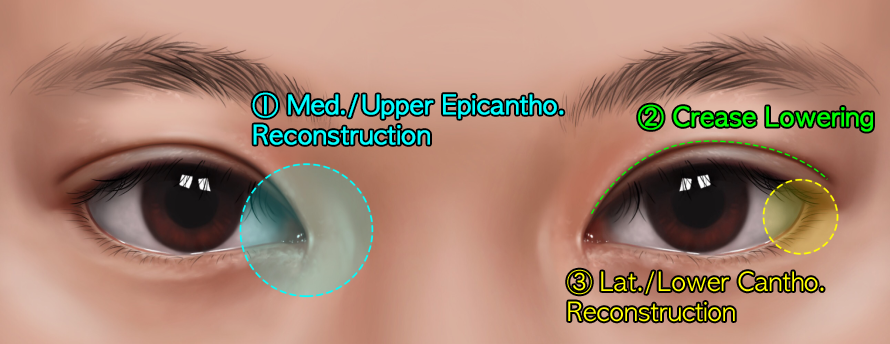
The inner-corner skin is thin and under tension, so careful personal aftercare is essential. Depending on your reconstruction, Steri-Strips may be used after stitch removal for approximately 2–3 months to help prevent separation, shape change, and scarring. Keep the head elevated, avoid bending forward, pressure on the eyes, and direct sun exposure during recovery.
Taping is essential to help prevent re-adhesion of the previous crease. Avoid cold or warm compresses if they may affect the muscles or the tape. Do not force the eyes open with the forehead or apply pressure to the surgical area.
Conjunctival swelling, mild drainage, and firm healing tissue can occur temporarily. Use cold compresses through day 5, avoid warm compresses for the first two weeks, sleep with the upper body elevated, and attend follow-up checks for any scar-care treatment.